
Mud shelter tubes
Pencil-width earthen tubes on foundations, piers, walls, or joists can provide protected travel between soil and wood.
Professional termite treatment and prevention services in Fayetteville, NC. We protect your home's structure from termite damage using proven liquid barrier and bait station technologies.
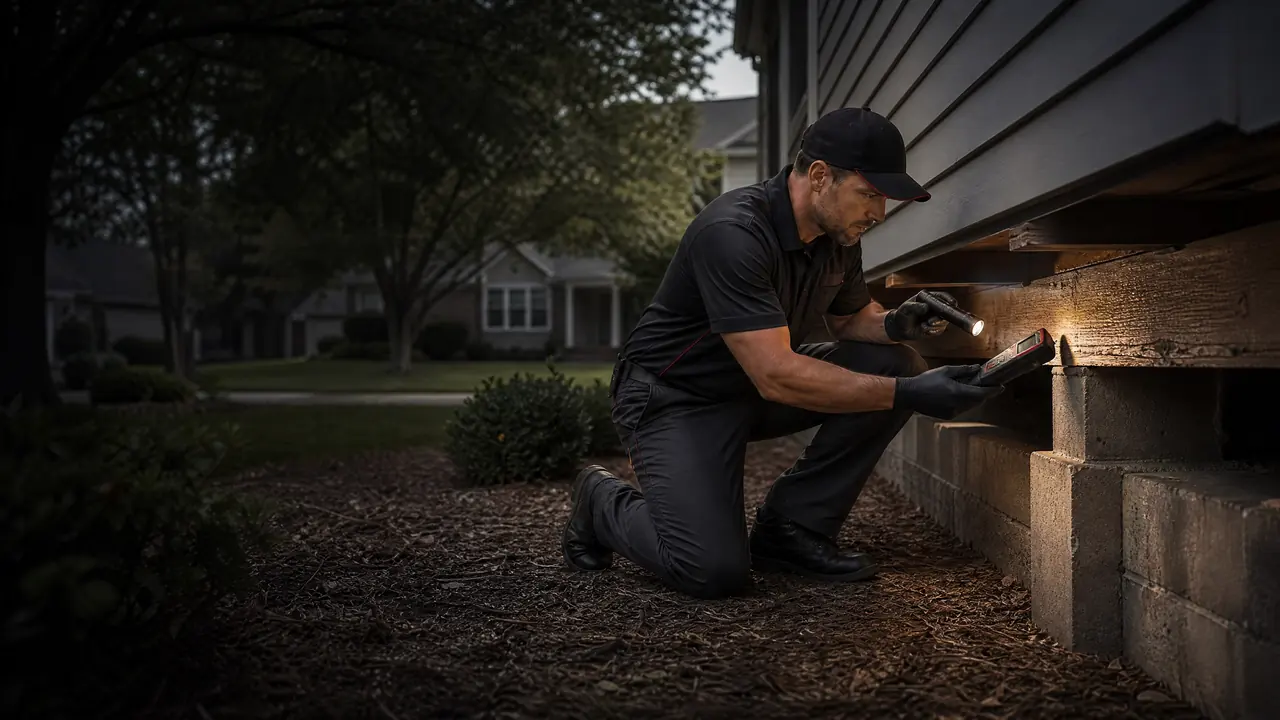
A focused inspection identifies activity, contributing conditions, and the right next step for your property.
Fayetteville-area service
Eastern subterranean termites can remain hidden in soil, crawl spaces, wall cavities, and structural wood. A Fayetteville-area termite inspection looks for mud tubes, swarm evidence, accessible damage, wood-to-soil contact, moisture, and other conditions before treatment options are explained.
Venum Pest Solutions serves Fayetteville, Hope Mills, Spring Lake, Fort Liberty, Raeford, Southern Pines, Sanford, and Eastover, North Carolina. Service availability can vary by location; call to confirm your property is within the current route.
Tell us what you are seeing and where the activity is occurring. We will follow up using the contact details you provide.
Useful guidance before service
Subterranean termites live primarily in the soil and can reach structural wood through cracks, plumbing penetrations, foundation joints, crawl-space piers, and mud shelter tubes. Because much of their activity stays concealed, an inspection should cover accessible foundation areas, crawl-space framing, sill plates, plumbing locations, porches, attached wood, and other places where soil, moisture, and cellulose meet. A swarm near the house can be an important warning, but the absence of visible swarmers does not prove the property is clear.
Venum's inspection separates current evidence from old damage and from conditions that can resemble termite activity. The technician looks for live termites, mud tubes, damaged or hollowed wood, discarded wings, swarm exit points, wood-to-soil contact, moisture, debris, and construction features that affect treatment. Findings are explained before liquid treatment, bait stations, monitoring, or prevention work is recommended.
Treatment choice depends on the building and accessible risk areas. A liquid termiticide treatment is designed to establish a treated zone in specified soil or structural locations. A bait system uses monitored stations placed around the structure. Neither option should be presented as a generic cure without considering access, foundation type, wells or drainage features, prior treatment, and the ongoing inspection requirements for that system.
One sign rarely tells the whole story. Document where and when you notice activity, avoid disturbing the area when possible, and request an inspection if the evidence continues.
Pencil-width earthen tubes on foundations, piers, walls, or joists can provide protected travel between soil and wood.
Winged termites or piles of similarly sized wings near doors, windows, vents, or lights may indicate a nearby colony.
Wood that sounds hollow, breaks along the grain, or reveals layered galleries should be inspected rather than covered or patched first.
Raised paint, blistered trim, or uneven flooring can have several causes, including moisture, but concealed termite damage is one possibility.
Leaking plumbing, poor drainage, damp crawl-space wood, stumps, form boards, and siding or framing close to soil can support termite access.
The most common and destructive termite species in North Carolina. They build underground colonies and travel through mud tubes to reach wood in homes.
An aggressive subterranean termite that can form very large colonies and cause significant structural damage.
Our inspector examines the property for activity, damage, and conducive conditions.
Based on the findings, we recommend the treatment approach suited to the property.
Our technicians install liquid barriers or bait stations using established methods.
Annual inspections and monitoring help maintain termite protection.
Common signs include mud tubes, hollow-sounding wood, discarded wings near windows, and damaged wood or drywall.
Damage depends on colony size, time, and access to structural wood. Early inspection is important when warning signs appear.
Liquid barriers create a treated zone around the foundation. Bait stations use monitored placements intended to affect the colony.
Treatment life varies by product, property conditions, and maintenance. We explain monitoring and renewal requirements before service.
No. They can appear similar from a distance, but antenna shape, waist shape, and wing size differ. Save a specimen or clear photo when possible and request an inspection instead of relying on color alone.
Whenever practical, have the termite inspection completed before concealed areas are covered or damaged material is removed. Structural repairs may require a qualified contractor after the activity and treatment needs are understood.
Helpful homeowner guides
Learn how North Carolina homeowners can distinguish flying ants from termite swarmers, recognize evidence that merits an inspection, and respond without destroying useful clues.
TermitesLearn the warning signs of subterranean termite activity, from mud tubes and swarmers to hidden wood damage.
TermitesReduce termite-conducive conditions around your foundation, crawl space, landscaping, and plumbing.
Call today for a free, no-obligation inspection. We will assess the property and explain the recommended next step.
Call: 877-878-3686