
Flying Ants vs. Termite Swarmers in North Carolina: When to Schedule an Inspection
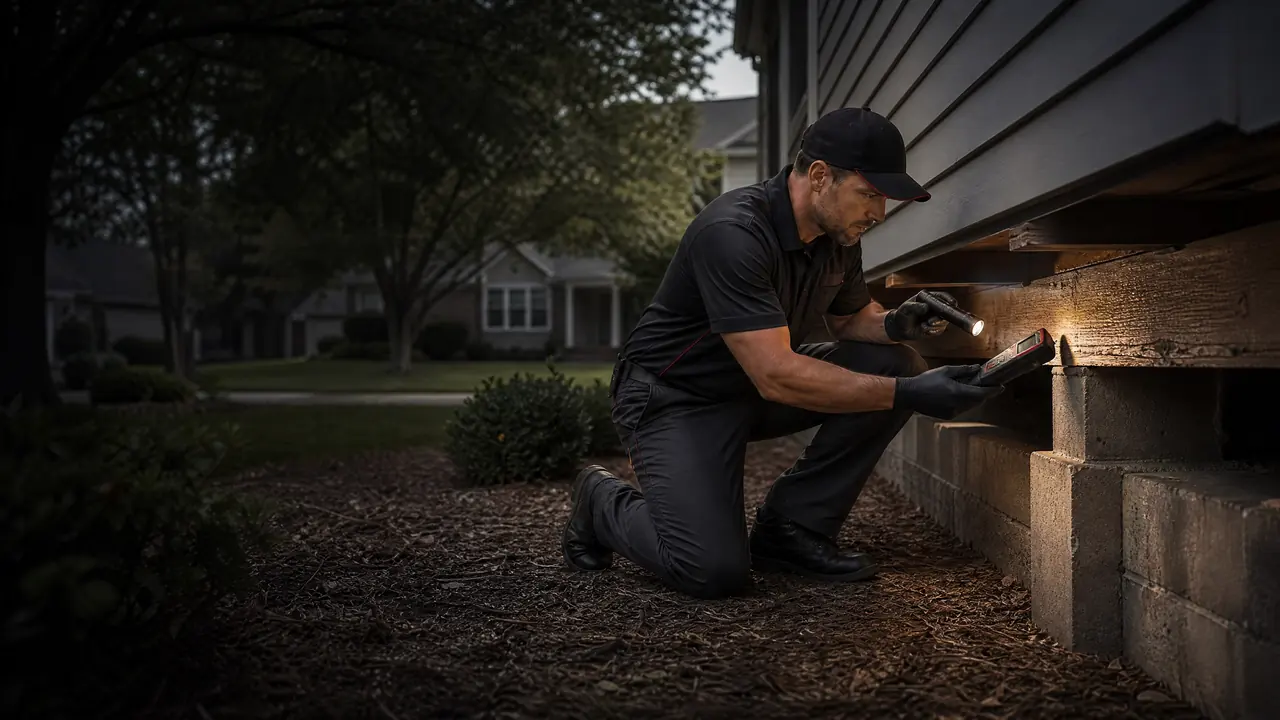
Learn how North Carolina homeowners can distinguish flying ants from termite swarmers, recognize evidence that merits an inspection, and respond without destroying useful clues.
Why winged insects indoors deserve attention
A winged insect at a Fayetteville window after warm, wet weather is not automatically a termite. Ants and termites both produce winged reproductive adults, and their swarming periods can overlap. In North Carolina, subterranean termite species may swarm from late winter into fall, often during the day after rain. Timing alone cannot identify what you found.
Location changes the urgency. Winged insects outdoors near an old stump, landscape timber, or mulch may have come from a colony elsewhere in the yard or neighborhood. A group of suspected termite swarmers inside a home—or a cluster of dropped wings on a sill, floor, or near a light—should prompt a timely termite inspection. It can indicate activity in or beneath the structure, although identification is still essential.
Three details separate flying ants from termite swarmers
Use several features together rather than relying on size or color. A clear photo of a specimen beside a coin can help, but keeping a few insects or loose wings for identification is more useful than trying to decide from a blurry image.
- Flying ants usually have a distinctly narrow, pinched waist; termite swarmers have a more evenly broad, tube-like body
- Ant antennae are bent or elbowed; termite antennae are straighter and commonly appear beaded
- An ant's front wings are longer than its rear wings; a termite swarmer's four wings are roughly alike in length and shape
- Color is not a dependable shortcut; if only wings remain, compare the wing pairs and save a sample
Evidence that calls for a termite inspection
Do not wait for a large visible insect population. Subterranean termites often stay concealed in soil, wood, or protected passageways. Schedule an inspection promptly when you find the following evidence, especially inside the house, crawl space, garage, or along the foundation.
- Live insects matching termite-swarmer features indoors or numerous shed, similarly sized wings indoors
- Mud-like shelter tubes on foundation walls, piers, floor joists, subflooring, or material joints
- Exposed wood that sounds hollow, feels soft when carefully probed, or has a thin gritty gray-brown surface film
- Visible tunneling or damage to wood, cardboard, paper products, or the paper facing on drywall
- A water leak, persistently damp crawl space, poor drainage, or wood-to-soil contact together with another warning sign
A practical response after you spot a swarm
A calm, documented response gives an inspector better information. Start with accessible areas only. Do not remove finishes, enter an unsafe crawl space, or take apart building components to investigate.
- Collect several insects or wings in a small sealed container, or press them onto clear tape; take photos before cleaning
- Note the date, room, exact location, whether the insects were indoors or outdoors, and recent rain or moisture
- From safe locations, look for shelter tubes, wood-to-soil contact, standing water, gutter discharge, and active leaks
- Keep any existing termite service agreement and past inspection reports available
- Arrange a termite inspection rather than assuming the visible swarm identified or solved the hidden issue
Where do-it-yourself action stops
Vacuuming visible swarmers can reduce the immediate nuisance, but it does not reach hidden worker termites. An aerosol that kills insects you can see does not establish that a colony is gone or provide structural protection. Avoid painting over, patching over, or discarding key evidence before it has been photographed or sampled.
Do not trench, drill, inject, or apply a termiticide as a substitute for a professional evaluation. EPA guidance notes that termite treatment often requires trained pest-management professionals. Improper treatment can fail to protect the structure and may contaminate the home or nearby water. Homeowners can safely reduce obvious conducive conditions, such as fixing leaks and directing water away from the foundation, while awaiting guidance on the evidence found.
Get clarity for your Fayetteville-area property
A termite inspection should distinguish visible evidence from moisture or construction conditions that merely increase risk. Share where the insects or wings appeared and ask which areas were visible and accessible. North Carolina consumer guidance notes that inspections have limits because activity behind walls, beneath floor coverings, and in other concealed spaces may not be visible even during a thorough inspection.
For a home in Fayetteville, Hope Mills, Spring Lake, Raeford, or a surrounding community, schedule a Venum property inspection at 877-878-3686. Photos, samples, and prior termite records can make the next step clearer—whether the winged insects are ants, termite swarmers, or another insect that needs closer evaluation.
Related homeowner guides
Signs of Termites in North Carolina Homes
Learn the warning signs of subterranean termite activity, from mud tubes and swarmers to hidden wood damage.
TermitesTermite Prevention Tips for North Carolina Homeowners
Reduce termite-conducive conditions around your foundation, crawl space, landscaping, and plumbing.
Pest ControlFall Pest Activity in Fayetteville, NC
Fall can change what homeowners notice around a Fayetteville home, from a mouse trail in a quiet attic to insects gathering on a sunny exterior wall. This observation-focused guide explains the seasonal behavior behind those signs and what to monitor from September through November.
Need Help Protecting Your Property?
Schedule a free inspection with Venum Pest Solutions.
Call: 877-878-3686