Persistent musty odor
An odor that is strongest near floors, closets, utility penetrations, or HVAC returns can originate from damp materials below the living space.
Complete crawl space encapsulation and moisture control solutions for homes in Cumberland County. We address moisture sources to protect structural materials, improve conditions, and support a healthier home environment.
A focused inspection identifies activity, contributing conditions, and the right next step for your property.
Fayetteville-area service
Warm, humid conditions and ground moisture can contribute to musty odors, condensation, wood moisture, damaged insulation, pest activity, and standing water beneath Fayetteville-area homes. A useful crawl-space assessment identifies the moisture source before recommending drainage, vapor barriers, sealing, dehumidification, or related repairs.
Venum Pest Solutions serves Fayetteville, Hope Mills, Spring Lake, Fort Liberty, Raeford, Southern Pines, Sanford, and Eastover, North Carolina. Service availability can vary by location; call to confirm your property is within the current route.
Tell us what you are seeing and where the activity is occurring. We will follow up using the contact details you provide.
Useful guidance before service
Crawl-space moisture is a condition with a source, not a single product problem. Ground evaporation, humid outdoor air, roof or surface drainage, plumbing leaks, foundation openings, condensate, and groundwater can produce very different patterns. Venum begins by inspecting accessible soil, foundation walls, vents, insulation, plumbing, ducts, joists, subflooring, and low areas so the recommendation addresses where the water or humidity is coming from.
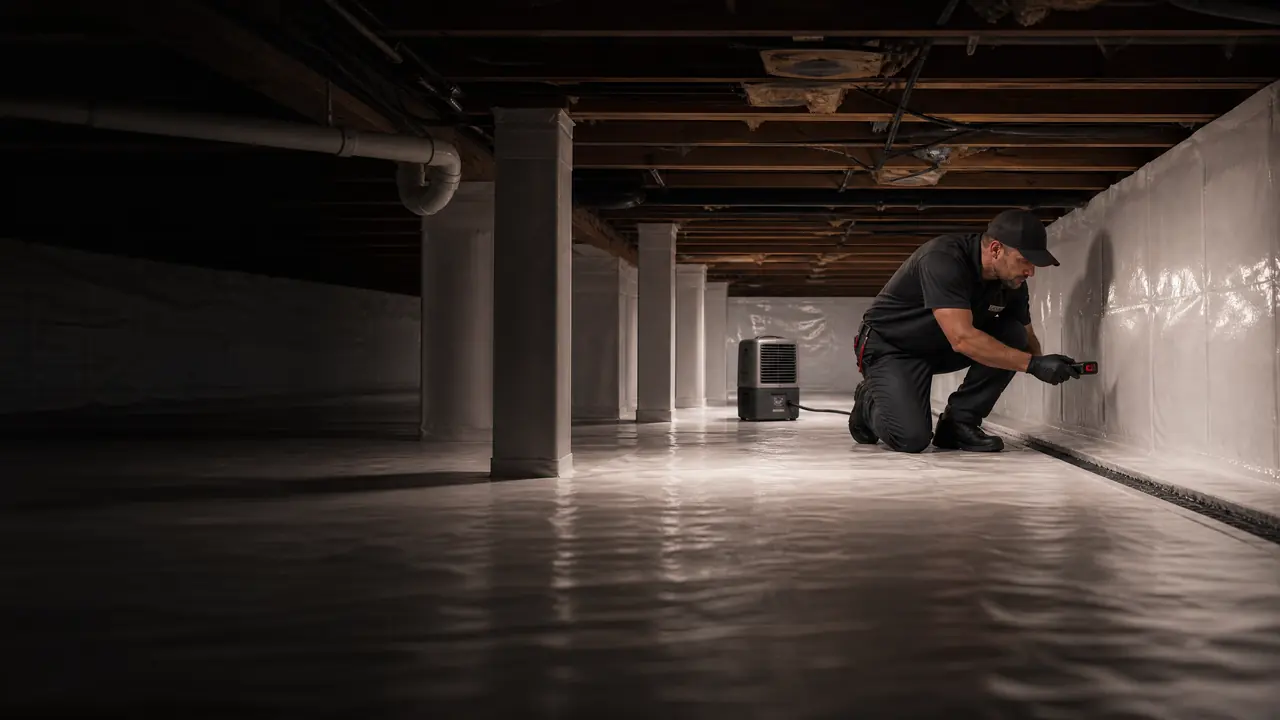
The corrective plan may include removing damaged or fallen material, improving drainage, installing a ground vapor barrier, sealing selected openings, adding a properly sized dehumidifier, or combining those steps into an encapsulation system. Standing water and bulk water should be addressed before relying on a dehumidifier. Likewise, covering the soil without considering drainage, leaks, or air movement can leave the underlying cause unresolved.
Damp crawl spaces can also support pest activity. American cockroaches, camel crickets, silverfish, centipedes, termites, ants, and rodents may use moisture, shelter, insulation, or accessible openings below a home. Moisture work does not replace pest or termite treatment, but identifying both conditions during the property review helps the homeowner understand which problems require separate services.
One sign rarely tells the whole story. Document where and when you notice activity, avoid disturbing the area when possible, and request an inspection if the evidence continues.
An odor that is strongest near floors, closets, utility penetrations, or HVAC returns can originate from damp materials below the living space.
Sweating ducts, damp pipes, water droplets, or consistently high humidity show that moisture is accumulating faster than the space can dry.
Puddles, erosion, staining, or saturated soil can point to drainage, groundwater, condensate, roof runoff, or plumbing problems.
Fallen insulation, soft subflooring, cupped floors, or visible wood deterioration warrant inspection of both moisture and structural conditions.
Discoloration on joists, subflooring, masonry, or insulation needs careful evaluation; appearance alone cannot identify the material or its cause.
Camel crickets, cockroaches, silverfish, centipedes, ants, termites, or rodents can be associated with damp shelter and openings below the home.
Growth that develops in damp crawl spaces and can affect air quality and building materials.
Structural wood deterioration caused by prolonged moisture exposure.
Sagging floors and compromised framing that can result from chronic moisture conditions.
Excess moisture that supports pests, condensation, odors, and material damage.
Water accumulation from drainage problems, plumbing leaks, or groundwater conditions.
We inspect the crawl space for moisture, damage, mold, and drainage issues.
We identify the corrective work needed before encapsulation or humidity control.
We install the specified vapor barrier, sealing, and humidity-control components.
Ongoing monitoring helps confirm the crawl space remains dry and protected.
Encapsulation seals the crawl space with a heavy-duty vapor barrier and may include vent sealing and dehumidification.
Signs include musty odors, high humidity, condensation, sagging floors, visible growth, and increased pest activity.
Results vary by house and system. Encapsulation can improve crawl-space conditions, but no specific savings can be guaranteed.
Most residential projects take one to three days depending on size, access, and the condition of the crawl space.
A vapor barrier reduces moisture evaporating from the soil, but it does not correct active plumbing leaks, roof runoff, groundwater entry, or poor grading. Bulk-water sources may need drainage or repair first.
Not every crawl space has the same humidity load. The need and size depend on the enclosure, drainage, air leakage, dimensions, and measured conditions. The inspection should determine which components work together.
Helpful homeowner guides
A practical Fayetteville-area guide to tracing crawl-space water after heavy rain, reducing humidity safely, and knowing when an inspection is appropriate.
Moisture ControlUnderstand how a sealed crawl space can control ground moisture, protect framing, and support more stable indoor conditions.
Moisture ControlRecognize musty odors, condensation, wood moisture, damaged insulation, and other signs beneath your home.
Call today for a free, no-obligation inspection. We will assess the property and explain the recommended next step.
Call: 877-878-3686