Crawl Space Encapsulation Benefits for Cumberland County Homes
Understand how a sealed crawl space can control ground moisture, protect framing, and support more stable indoor conditions.
Why crawl-space moisture matters
A vented or poorly sealed crawl space can draw humid outdoor air and ground moisture beneath the home. Condensation, musty odors, pests, and elevated wood moisture can follow—especially during North Carolina's warm, humid months.
Because air moves between the crawl space and living areas, conditions below the floor can also affect comfort and indoor air quality.
What encapsulation changes
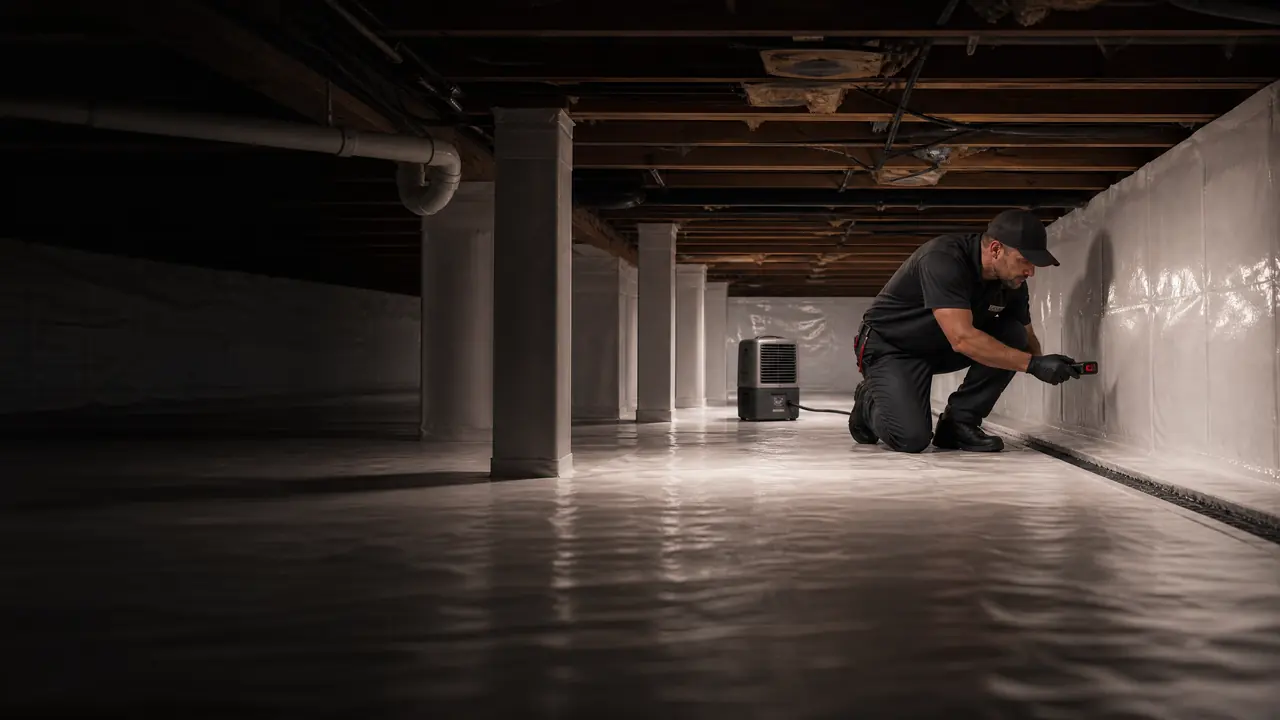
A complete solution is more than laying plastic on the ground. The system should address drainage, ground vapor, wall and pier transitions, vents, penetrations, and humidity control as one connected assembly.
- Reduces ground moisture entering the crawl space
- Creates a cleaner environment for inspections and maintenance
- Helps protect joists, subflooring, and other structural wood
- Makes humidity easier to manage with a properly sized dehumidifier
- Can reduce conditions that attract moisture-loving insects
Benefits depend on controlling the moisture source
Encapsulation works best when the source of unwanted water is identified first. Ground vapor may be the primary concern in one home, while another property may have roof runoff, poor grading, plumbing leaks, condensation, or standing water that needs separate correction.
Sealing a wet crawl space without addressing bulk water can hide the symptom instead of correcting the cause. A useful assessment documents where moisture is entering, which materials are affected, and whether drainage work should come before the vapor system.
What a complete encapsulation plan should explain
A homeowner should be able to understand what will be covered, sealed, drained, conditioned, and monitored before work begins. The proposal should fit the actual crawl space rather than rely on a one-size-fits-all package.
- How ground vapor will be isolated and how seams and penetrations will be sealed
- Whether foundation walls, piers, vents, doors, and utility openings are included
- How standing water, low areas, drainage, or pump needs will be handled
- Whether a dehumidifier is recommended and how condensate will discharge
- How technicians will retain access for termite inspections, plumbing, wiring, and future maintenance
When encapsulation should wait
Active plumbing leaks, foundation water entry, unsafe electrical conditions, significant structural damage, or unresolved drainage problems may need attention before the crawl space is sealed. Treating those priorities in the correct order reduces the chance that water will collect beneath a finished system.
Visible fungal growth or damaged insulation may also require a separate evaluation. Encapsulation manages the environment going forward, but it does not automatically repair wood, remove contaminated material, or correct every source of indoor odor.
Maintaining the crawl space after installation
A sealed crawl space should still be inspected. Homeowners should check that the access door closes securely, the liner remains attached, drainage paths stay open, and the dehumidifier operates and drains correctly. Plumbing, HVAC, pest, or utility work can puncture or move materials, so the system should be reviewed after other contractors have worked below the home.
Seasonal humidity readings and periodic wood-moisture checks can help confirm that the system is performing as intended. If odors, standing water, pests, or condensation return, the cause should be investigated rather than covered with an additional layer of material.
Start with a property-specific assessment
Every crawl space is different. Standing water, plumbing leaks, grading, damaged insulation, mold-like growth, structural concerns, and prior termite treatments should be evaluated before a final system is designed.
Venum Pest Solutions provides crawl-space moisture assessments in Fayetteville and Cumberland County. Call 877-878-3686 to schedule a free inspection and learn which moisture-control steps fit your home.
Related homeowner guides
Crawl-Space Humidity and Standing Water After Heavy Rain in Fayetteville, NC
A practical Fayetteville-area guide to tracing crawl-space water after heavy rain, reducing humidity safely, and knowing when an inspection is appropriate.
Moisture ControlCrawl Space Moisture Problems: Signs and Solutions
Recognize musty odors, condensation, wood moisture, damaged insulation, and other signs beneath your home.
Pest ControlFall Pest Activity in Fayetteville, NC
Fall can change what homeowners notice around a Fayetteville home, from a mouse trail in a quiet attic to insects gathering on a sunny exterior wall. This observation-focused guide explains the seasonal behavior behind those signs and what to monitor from September through November.
Need Help Protecting Your Property?
Schedule a free inspection with Venum Pest Solutions.
Call: 877-878-3686