
Squirrel Attic Entry Signs in Fayetteville, NC: When to Wait Before Sealing a Hole
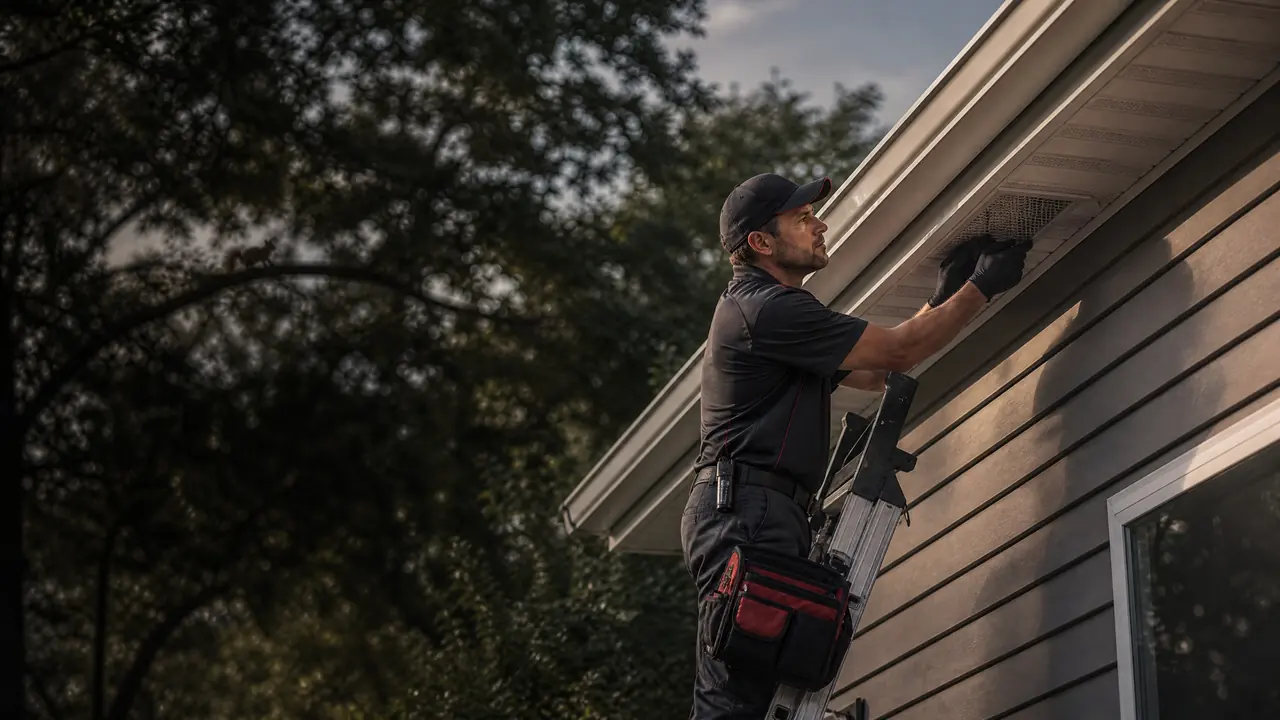
Learn how to recognize likely squirrel attic entry signs, identify activity humanely, avoid trapping young inside, and decide when an inspection is the prudent next step.
Why daytime attic activity deserves a closer look
Daytime scurrying above a ceiling in Fayetteville can point to a squirrel, but it is not a diagnosis. Eastern gray squirrels are common statewide and active during the day, and an attic can serve as a dry, protected nest site. Homes in Hope Mills, Spring Lake, and other wooded Cumberland County communities may share the same vulnerable roof details.
Do not assume that every sound is a squirrel. The practical goal is to identify the access pattern without approaching wildlife or trapping an animal inside. Timely attention is sensible because squirrels' constant chewing can damage wood, soffits, roof components, and wiring.
Look for a pattern, not a single clue
Begin outside and from the ground. Near daylight, watch a suspected roofline, vent, chimney intersection, or soffit for an animal leaving or returning. A phone video or a camera placed safely away can document timing without putting your hands near a possible nest. Fresh gnawing, a clear route from a limb or utility line to the roof, and daytime movement make a squirrel more likely, but not certain. Gray squirrels are normally active during the day; activity mainly after dark, or unusually heavy sounds, deserves a broader wildlife assessment.
- Chewed or rough-edged gaps at a soffit, fascia, roof vent, or between shingles, especially where an existing opening looks enlarged
- Scratching, scampering, or gnawing over the ceiling during daylight, often near early morning or late afternoon
- Displaced insulation or nest material near an entry area; droppings can be a clue, but do not touch unknown waste bare-handed
- Repeat visits to one roof feature or an obvious access route, including a limb, cable, or nearby structure
When not to seal a squirrel opening
Never make a fast repair simply because you found a hole. An adult squirrel may be using it as the only route to a nest, and closing it can strand the animal—or dependent young—inside. The North Carolina Wildlife Resources Commission advises delaying repairs when a squirrel is nesting until the young have matured and left. Do not seal when you see regular use, hear activity that suggests a nest, find young, or have not verified that the attic is vacant.
Timing should be based on the animals present, not only a calendar. NC State Extension reports that gray squirrels breed in midwinter and again in June, with young born about 40–45 days later and weaned after about two months. Those periods are a cue for care, not a substitute for inspection. When no squirrels or young remain, a properly fitted one-way gate can let an animal exit without returning. Permanently close the opening only after confirmed departure.
A practical, humane response plan
Use this sequence to protect the home while avoiding an occupied-nest mistake. Keep observation and exterior-prevention steps within your comfort level. Roof access and uncertain attic conditions call for a professional assessment.
- Observe safely from outdoors and note the location, time of day, direction of travel, and visible chewing or gaps
- Reduce easy food sources: bring pet-food bowls inside, secure garbage, and reconsider bird-feeder placement
- From ground level, map visible gaps around soffits, roof vents, siding, chimneys, and utility penetrations
- Do not block the active opening while occupancy is uncertain; when a nest is not present, exclusion can use a one-way device
- After confirmed departure, close access points with durable metal sheeting or wire mesh with openings no larger than one-half inch
- Trim tree limbs at least six feet from the home where safe and feasible; never work near power lines or from an unsafe roof position
Where do-it-yourself work should stop
DIY prevention is best limited to simple, safely reachable exterior tasks. Do not try to catch a squirrel, reach into nesting material, remove young, or handle an animal that is cornered, injured, or acting unusually. Squirrels can bite or scratch in self-defense. North Carolina guidance also notes that only licensed rehabilitators may possess injured or orphaned squirrels.
Stop and seek help if the entry point is high on a roof, wiring may be chewed, insulation or waste is extensive, or you cannot determine whether young are present. Avoid bare-hand contact with animal waste, keep children and pets away from the affected area, and wash hands after any cleanup contact. A safe response is more important than a quick patch.
Schedule a Fayetteville-area property inspection
If you have recurring daytime attic sounds, visible chewing at a roofline, or a suspected squirrel entry point, schedule a Venum property inspection at 877-878-3686. An inspection gives you a documented starting point for identifying likely access areas and deciding whether exclusion should wait for animals to leave.
Calling before sealing an uncertain opening can help prevent the difficult outcome of trapping a squirrel or litter inside the attic. For homeowners in Fayetteville and surrounding communities, that measured approach supports both practical repairs and humane wildlife handling.
Related homeowner guides
Wildlife in the Attic: What Fayetteville Homeowners Should Do
Safe first steps when you hear scratching, movement, or animal activity above the ceiling.
Pest ControlFall Pest Activity in Fayetteville, NC
Fall can change what homeowners notice around a Fayetteville home, from a mouse trail in a quiet attic to insects gathering on a sunny exterior wall. This observation-focused guide explains the seasonal behavior behind those signs and what to monitor from September through November.
Pest ControlHope Mills Home Pest Guide: Lake, Rain, and Entry Points
Hope Mills Lake and the town’s creek history make water a familiar part of the local landscape. This practical guide explains how to inspect the conditions around your own home—rain runoff, damp areas, vegetation, and small openings—before deciding whether any pest action is needed.
Need Help Protecting Your Property?
Schedule a free inspection with Venum Pest Solutions.
Call: 877-878-3686